

On a recent trip to Long Island in The Bahamas, we observed the heartbreaking amount of plastic waste on local beaches. Our coral reef team found an overwhelming amount of everyday items, like shampoo bottles, medications, and kitchen utensils scattered in the sand.

The stark reality is that most of this trash is not from Long Island. The vast majority of it likely originated from outside of The Bahamas (many had labels in Spanish and French). Indeed, plastic containers, rope, and bottles are known to travel thousands of miles via ocean currents and eventually wash up on beaches all around the world.
“One of the saddest parts is thinking about all of the microplastics that are left behind in the ocean while these containers travel here”, said Dr. Valeria Pizarro, senior coral reef scientist at PIMS.
When plastic waste travels across the globe, it’s broken down by ocean currents, waves, sunlight and chemical reactions, thus creating microplastics. Microplastics can easily be mistaken by fish and other sea life as food. These plastic particles are toxic for sea animals, they can injure their digestive tract and stomach, and can cause animals to starve to death. Microplastics have even been found inside of coral polyps and stuck to their tentacles.

In less than three minutes, our staff collected a conglomerate of something that we all can relate to: shoes and their soles. “Seeing so many soles of shoes on the beach really made me think about my own items, the materials that they are made of, and how long they will exist in this world”, said Meghyn Fountain, a research assistant at the Perry Institute. “I feel even more motivated to practice minimalism, to buy second-hand, and to invest in fixing things when they break instead of buying anew.”

These items stick around. Shoes, for example, take 25-40 years to degrade and rubber soles take 50-80 years break down. Monofilament fishing line, on the other hand, can take 600 years, and plastic bags can take up to 1000 years.
Why the range of time? In different environments, items break down at different rates. Some materials may break down faster in the ocean, and others may not degrade at all. The rate is dependent on the exposure to sunlight, the presence or absence of microorganisms, the amount of oxygen, temperature, and more.
The bottom line is that the world’s ocean connects all of us. And this means that the scope of each and everyone’s impact is great. So, how can you help?
· Limit your use of single-use plastics. This can be as simple as bringing reusable shopping bags to the grocery store and always leaving the house with a reusable water bottle or coffee mug.
· Think LNT (Leave No Trace). Whether heading to the beach or going out for a walk, always be sure to pack up what you bring.
· Dispose to waste properly and always recycle when possible!
· Organize a beach or park clean-up day in your community.
· Each time you buy something, think about the journey that it took to get to you and how this journey will continue when it leaves you.

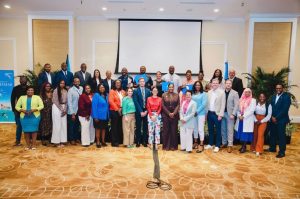
Bluequest Bahamas Wins National Award for Community Coral Restoration
Bluequest Bahamas, a Perry Institute Reef Rescue Network partner based at Delaporte Beach in Nassau, won the Community Conservation, Education, and Action (CCEA) award at the UN Tourism Bahamas Sustainable Islands Challenge. Here is how they built the coral restoration program that earned it.
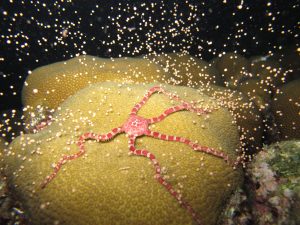
Why Coral Spawning Matters and How It Works
Coral Science & Conservation The Birth of the Next Generation of Bahamian Reefs: Why Coral Spawning Matters Every year, under the light of a late-summer full moon, something extraordinary happens
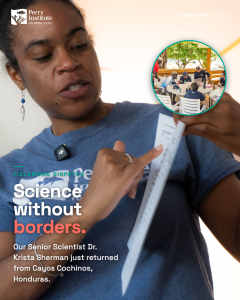
Listening for Nassau Grouper at Cayos Cochinos
Our Senior Scientist Dr. Krista Sherman just returned from her fourth year training Honduras Coral Reef Foundation staff on acoustic telemetry, listening for Nassau grouper at Roatan Bank.
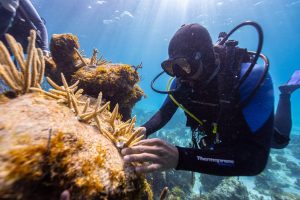
The Complete Guide to Planting Coral Reefs: Restoration Methods That Work
Plan your diving trip to Green Turtle Cay, Bahamas. Discover the best dive sites, coral reefs, how to get there, where to stay, and why this Abaco island is a hidden gem for underwater adventure.
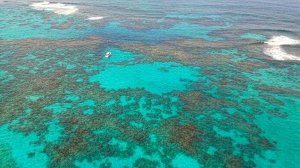
Green Turtle Cay Travel Guide for Divers
Plan your diving trip to Green Turtle Cay, Bahamas. Discover the best dive sites, coral reefs, how to get there, where to stay, and why this Abaco island is a hidden gem for underwater adventure.
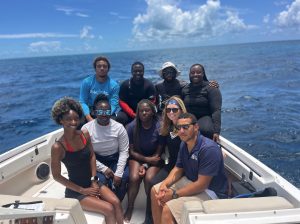
Become a PADI Dive Instructor in The Bahamas | Conservation-Focused IDC
Become a PADI Dive Instructor in The Bahamas | Conservation-Focused IDC | Perry Institute for Marine Science Education & Training Ready to take your diving skills to the next level
