
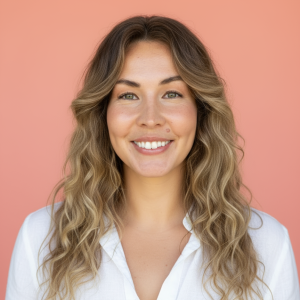
Will Greene is a research associate and photogrammetry specialist at PIMS. He leverages 3D modeling and Geographic Information Systems (GIS) technology to monitor coral reef and mangrove ecosystems, so that we can do a better job of preserving and restoring them for future generations.
We catch up with Will, his journey into the world of ocean sciences, and his unique skillset below!

Will, tell us how it all began. What inspired you to become a marine biologist?
“I grew up on an island on the coast of Maine, less than a mile from Acadia National Park, so I’ve been surrounded and fascinated by the ocean my entire life. I spent most of my free time as a kid exploring the ins and outs of Acadia National Park, which instilled in me a passion for nature and conservation that’s at the core of who I am. I graduated from Middlebury College in Vermont in 2019 with a degree in conservation biology and a focus in geography and cartography. During my senior year there, after taking a course on coral reef ecology in The Bahamas and falling in love with the underwater world all over again, I began working with PIMS on underwater photogrammetry projects, which evolved into a full time job in 2020.”

Above: Mangroves at night (drone shot by Will).
What does your day-to-day look like working at PIMS?
“When I’m in the field, I spend most of my time behind a camera, collecting data to make underwater models and maps with sub-millimeter precision, or flying a drone to map the land and shallow reefs from the sky. Back in the office (or the home during COVID!), I work on a computer to process, analyze, and learn from all of the field data to help with a wide variety of projects.

Above: Will’s model of Sandy Cay reef off Abaco, The Bahamas.

Above: A drone shot of the research ship, R/V Angari.

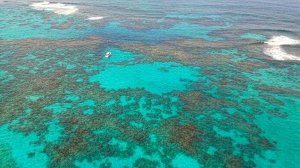
Above: An aerial shot of coral reefs.
Tell us more! How do your models bolster our understanding of coral reefs?
“Here’s my favorite way to think about what I do: creating digital replicas of exactly what the environment looked like at the time I was there, so that we can explore the model and learn all sorts of things from it (maybe even some things we were totally unaware of when we were in the field) in the future. It’s a complicated and incredibly fun job that lets me use my passions for conservation, biology, photography, mapping, and coral reefs, all at the same time!”

Above: A 3D model of a coral reef created by Will.
What’s the best part of your job?
One of the most rewarding parts of my job is getting to create aesthetically pleasing products, from hyper-accurate reconstructions of intact and beautiful reefs that you can explore in 3D, to taking mesmerizing drone photos from hundreds of feet above the ground. It’s an amazing way to highlight the natural beauty of The Bahamas. I hope that some of them bring new inspiration for you to help protect our natural world – they sure do for me!
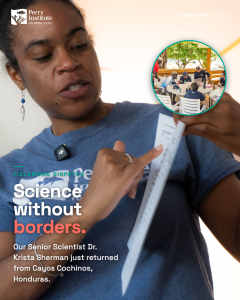
Listening for Nassau Grouper at Cayos Cochinos
Our Senior Scientist Dr. Krista Sherman just returned from her fourth year training Honduras Coral Reef Foundation staff on acoustic telemetry, listening for Nassau grouper at Roatan Bank.
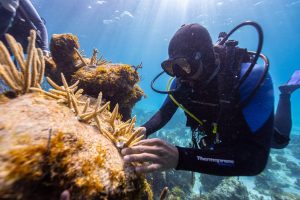
The Complete Guide to Planting Coral Reefs: Restoration Methods That Work
Plan your diving trip to Green Turtle Cay, Bahamas. Discover the best dive sites, coral reefs, how to get there, where to stay, and why this Abaco island is a hidden gem for underwater adventure.
Green Turtle Cay Travel Guide for Divers
Plan your diving trip to Green Turtle Cay, Bahamas. Discover the best dive sites, coral reefs, how to get there, where to stay, and why this Abaco island is a hidden gem for underwater adventure.
Become a PADI Dive Instructor in The Bahamas | Conservation-Focused IDC
Become a PADI Dive Instructor in The Bahamas | Conservation-Focused IDC | Perry Institute for Marine Science Education & Training Ready to take your diving skills to the next level
Stream2Sea Coral Care: The World’s First Reef-Positive Sunscreen
Stream2Sea Coral Care: The World’s First Reef-Positive Sunscreen | Perry Institute for Marine Science Conservation Partners Stream2Sea Coral Care: The World’s First Reef-Positive Sunscreen Discover why PIMS has partnered with

Build a Coral Reef for the Holidays | PIMS x Partanna
PIMS is partnering with Partanna to build a 100m² carbon-negative reef. Rick Fox is matching donations up to $25k. Help us build a sanctuary for the future.
