

The Complete Guide to Planting Coral Reefs: Restoration Methods That Work
Coral reef ecosystems support over 25% of marine species while covering less than 1% of the ocean floor. When these underwater rainforests decline, entire marine food webs collapse, coastal communities lose protection from storms, and millions of people face economic hardship. The good news? We’re not powerless. Through proven coral restoration methods, we can actively rebuild these vital ecosystems.
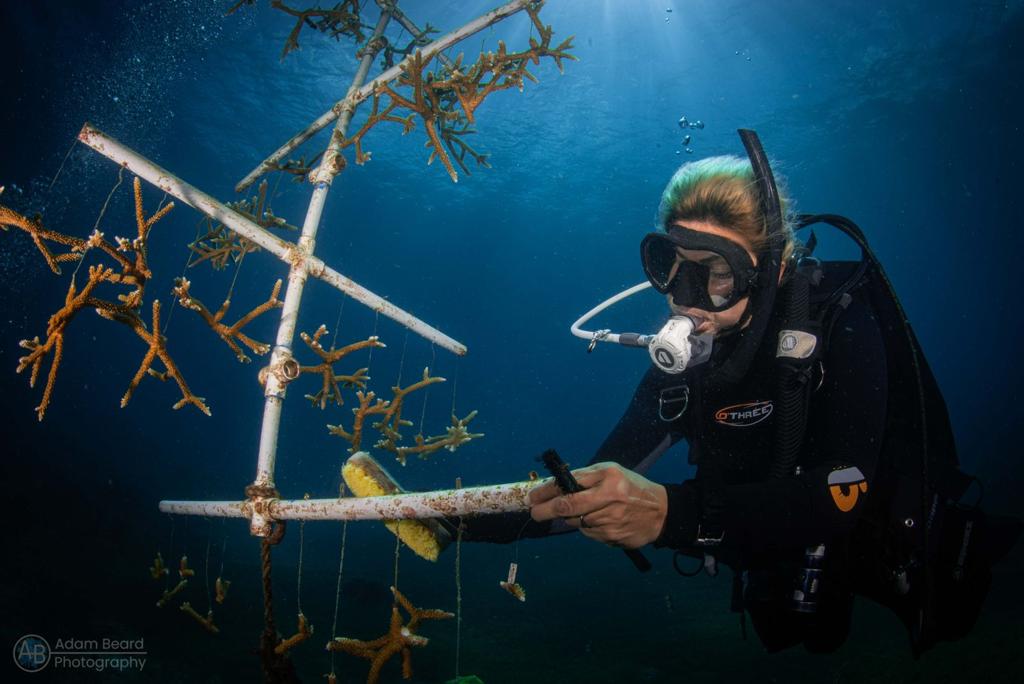
At Perry Institute for Marine Science, we’ve witnessed firsthand how targeted coral planting initiatives can transform degraded reefs into thriving ecosystems. Our Reef Rescue Network has been pioneering coral restoration techniques in The Bahamas, working with local communities and international volunteers to plant thousands of coral fragments and monitor their growth.
Understanding Coral Restoration Science
Coral restoration isn’t simply about moving corals from one place to another. It’s a science-based approach that involves understanding coral biology, ecology, and the specific stressors affecting each reef system. Successful coral planting requires careful species selection, proper timing, and ongoing monitoring to ensure transplanted corals can survive and reproduce.
The Coral Restoration Cycle
Modern coral restoration follows a proven cycle: fragment collection from healthy donor colonies, nursery cultivation to build coral strength and size, strategic outplanting to degraded reef sites, and long-term monitoring to track survival and growth. This approach maximizes restoration success while minimizing impact on donor populations.
The foundation of effective coral planting lies in understanding local conditions. Water temperature, depth, current patterns, and existing marine life all influence where and how corals should be transplanted. NOAA’s research has shown that restoration efforts are most successful when they work with natural reef dynamics rather than against them.
Proven Coral Planting Methods
Several coral restoration methods have demonstrated success across different reef environments. Each technique serves specific restoration goals and works best under particular conditions.
Direct Transplantation
The most straightforward approach involves carefully removing healthy coral fragments and attaching them directly to degraded reef areas using marine-safe cement or specialized adhesives. This method works well for fast-growing species like staghorn and elkhorn corals that can quickly establish in new locations.
Coral Nursery Systems
Nursery cultivation allows coral fragments to grow in controlled conditions before outplanting. Suspended line nurseries, table nurseries, and tree nurseries each offer advantages for different species. Nursery-grown corals often show higher survival rates when transplanted to restoration sites.
Coral Microfragmentation
This advanced technique involves breaking corals into very small pieces that heal and fuse together, accelerating growth rates by up to 50 times. Microfragmented corals can reach reproductive size in just 2-3 years instead of the typical 8-10 years, dramatically speeding ecosystem recovery.
Substrate Enhancement
Sometimes the reef foundation itself needs repair. Substrate enhancement involves installing artificial reef structures, stabilizing rubble, or creating new hard surfaces where corals can attach. These structures serve as stepping stones for natural coral recruitment while providing immediate habitat for fish and invertebrates.
The Restoration Process: From Fragment to Reef
Successful coral planting follows a systematic process that maximizes survival while supporting natural reef recovery. Here’s how restoration teams approach each project:
Site Assessment and Planning
At Perry Institute for Marine Science, every restoration project begins with thorough site evaluation. Teams assess water quality, current patterns, existing marine life, and potential stressors that could threaten transplanted corals. This data informs species selection and placement strategies that give restored corals the best chance of survival.
Fragment Collection and Preparation
Coral fragments are collected from healthy donor colonies using techniques that minimize stress to both donor and fragment. Collection typically occurs during cooler months when corals are less vulnerable to temperature shock. Fragments are then conditioned in nursery systems where they develop resilience before outplanting.
Strategic Outplanting
When fragments reach optimal size and health, our PIMS restoration teams carefully attach them to target reef areas. Placement considers factors like water depth, current exposure, and proximity to existing healthy corals that can provide larvae for natural recruitment. The goal is creating restoration patches that will expand naturally over time.
Long-term Monitoring
Restoration success requires ongoing monitoring to track coral survival, growth rates, and reproduction. This data helps refine techniques and identify which approaches work best in specific environments. Monitoring also reveals when restored areas begin supporting fish populations and other marine life, indicating successful ecosystem recovery.
Getting Involved: Volunteer Opportunities in Coral Restoration
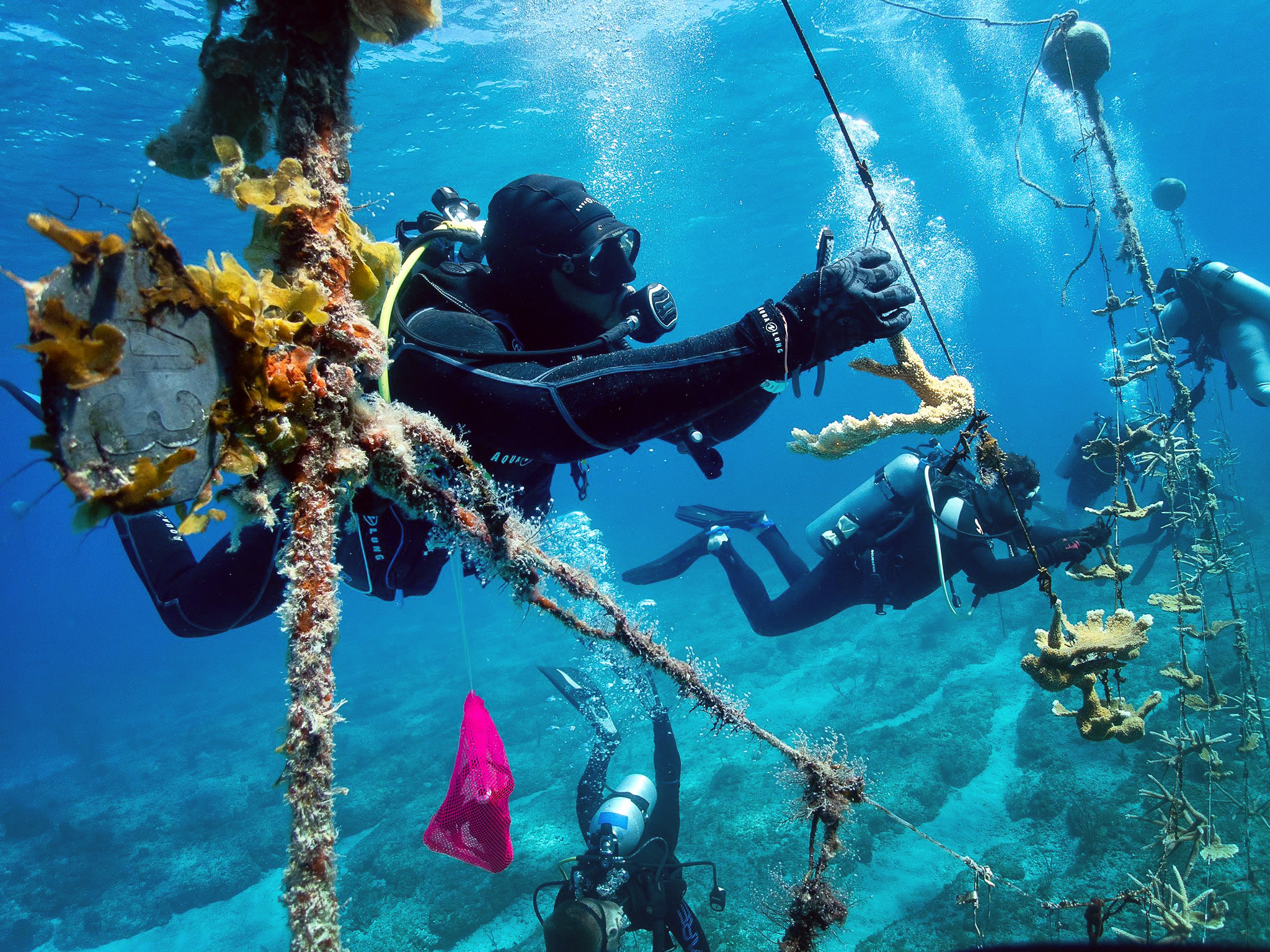
One of the most rewarding aspects of coral restoration is that trained volunteers can make meaningful contributions to reef recovery. Programs like PIMS’ Reef Rescue Expeditions provide hands-on training in coral transplantation techniques while contributing to active restoration projects.
Volunteers typically learn coral nursery maintenance, fragment preparation, underwater attachment techniques, and monitoring protocols. These skills enable participants to contribute immediately to restoration efforts while gaining deep understanding of reef ecosystems. Many volunteers become long-term advocates for coral conservation in their home communities.
What to Expect on a Restoration Expedition
Coral restoration expeditions combine scientific training with hands-on conservation work. Participants learn to identify healthy coral colonies, collect fragments using proper techniques, maintain nursery systems, and transplant corals to restoration sites. Daily activities include both diving work and data collection to track restoration progress.
The learning curve for coral restoration volunteers is remarkably accessible. While advanced techniques require extensive training, basic transplantation methods can be learned in just a few days. This makes restoration expeditions perfect for divers who want to contribute meaningfully to ocean conservation while developing new skills.
Success Stories: Where Restoration Is Working
Coral restoration projects around the world are demonstrating that damaged reefs can recover when given proper support. In The Bahamas, restoration efforts have successfully re-established coral populations in areas that had been severely degraded by hurricanes and bleaching events.
The Caribbean’s Coral Restoration Foundation has planted over 200,000 corals across Florida’s reef system, creating restoration sites that now support diverse fish populations and contribute larvae to surrounding reefs. Similar success stories are emerging from restoration projects in Australia, Hawaii, and throughout the Indo-Pacific.
What makes these projects successful is their integration of scientific research, community involvement, and long-term commitment. Restoration isn’t a one-time event but an ongoing process that requires sustained effort and adaptive management based on monitoring results.
The Future of Coral Restoration
As restoration techniques continue advancing, the potential for reef recovery grows. Innovations in coral breeding, genetic tools, and assisted evolution are expanding possibilities for helping corals adapt to changing ocean conditions. Projects are also scaling up, with restoration efforts now spanning entire reef systems rather than isolated sites.
The integration of traditional ecological knowledge with modern restoration science is proving particularly powerful. Local communities often possess decades of understanding about reef dynamics that inform more effective restoration strategies. This collaborative approach ensures restoration efforts support both ecosystem recovery and community needs.
Research published in Nature’s marine biology journals continues revealing new insights about coral biology that improve restoration success rates. Understanding how corals respond to stress, reproduce, and interact with their environment enables more targeted and effective restoration interventions.
Join the Coral Restoration Movement
Ready to get hands-on with coral restoration? PIMS offers expedition opportunities where you can learn professional restoration techniques while contributing to real conservation impact in The Bahamas’ pristine reefs.
Book Your Restoration ExpeditionFrequently Asked Questions About Coral Restoration
How long does it take for transplanted corals to establish?
Most coral transplants begin showing signs of successful establishment within 2-3 months, with visible growth occurring within 6-12 months. Fast-growing species like staghorn coral can show dramatic growth within the first year, while slower species may take 2-3 years to reach significant size. Full ecosystem recovery, including fish recruitment and natural coral spawning, typically occurs within 3-5 years at successful restoration sites.
What is the survival rate of restored corals?
Survival rates vary by species, location, and restoration method, but well-designed projects typically achieve 70-90% survival in the first year. Nursery-raised corals generally show higher survival rates than direct transplants because they’re better adapted to local conditions before outplanting. Long-term success depends heavily on ongoing site management and protection from stressors like pollution and physical damage.
Can coral restoration keep pace with reef degradation?
While restoration alone cannot solve the coral crisis, it plays a crucial role in maintaining reef resilience while we address larger threats like climate change. Restoration is most effective when combined with protection of existing reefs and reduction of local stressors. Strategic restoration can maintain genetic diversity and ecosystem function during the transition to more stable ocean conditions.
Do I need to be a certified diver to participate in restoration?
Most coral restoration work requires scuba diving certification, as transplantation occurs underwater at depths of 10-80 feet. However, many restoration programs include dive training or work with existing certification levels. Some aspects of restoration, like nursery maintenance in shallow water, may be accessible to snorkelers with proper training. PIMS’ PADI Conservation IDC program combines dive instruction with restoration training.
How do you choose which coral species to plant?
At PIMS, species selection depends on site conditions, restoration goals, and local ecosystem needs. Fast-growing branching species like staghorn and elkhorn corals are often prioritized for their rapid recovery and fish habitat value. Slow-growing boulder species provide long-term reef structure and resilience. Successful restoration projects typically plant multiple species to recreate natural reef diversity and increase ecosystem stability.
Ready to Make a Real Difference?
Join Perry Institute’s coral restoration expeditions and learn professional techniques while contributing to reef recovery in The Bahamas. Our programs combine hands-on restoration work with comprehensive marine science training.
Upcoming Expeditions:
Small Hope Bay – May 2026 | Small Hope Bay – November 2026 | Green Turtle Cay – 2027
