


”My name is Meghyn Fountain, and I’m a research intern working on Stony Coral Tissue Loss Disease (SCTLD), or what we call ‘Coral COVID.’ I chose to do an internship with PIMS because I remember coming across an Instagram post they made about Stony Coral Tissue Loss Disease, and I learnt a bit about the disease during my previous internship with Coral Vita. I thought it would’ve been a good idea to learn more about it and become more trained in the area because it’s such a devastating disease; so, here I am!
My main project involves mapping out both healthy and diseased corals at different time points in time to monitor how fast the diseases moves, and how quickly corals are dying. Using a geographical information system (GIS), I would outline the healthy tissue on the coral creating a polygon, then at different timepoints, if that coral becomes infected with SCTLD I would then alter that polygon, showing the area of that coral tissue that has died and the area that is still living. My supervisor, Dr. Valeria Pizarro, also trained me in techniques to treat SCTLD.
Taken together, I have learned so much during this internship. My first order of business was to master coral species identification while SCUBA diving, so that I could later identify species in the GIS program. I learned individual species codes, based on the Atlantic Gulf and Rapid Reef Assessment (AGRRA) methods for surveying coral reef health. I also learned a lot about diving. I came into this internship with my Advanced Open Water certification; however, my diving skills were definitely fine-tuned throughout this time.
Without a doubt, my work is crucial because coral reefs are essential to ocean biodiversity. It’s believed that coral reefs are more biodiverse than any ecosystem found on land and water, and they are home to about one quarter of all marine life. Working on this project is important because this disease is killing corals at an alarming rate and because scientists don’t exactly know what causes it as yet. In other words, we’re in a race against time.
.jpg)
This internship has helped with my career path because it has shown me that I love working with corals. I can admit that I never thought about it in my younger years but I truly would love to now. Also, I love meeting and working with so many accomplished scientists because they give great advice when it comes to furthering your career with a Master’s or PhD.
If I could give all Bahamians one message about marine conservation, it would be that it only takes one helpful action. Whether it’s picking some garbage on the beach, using a reusable cup/straw, practicing responsible boating or even supporting organizations that work to save and protect the ocean, your one choice could inspire another to help or it could inspire you to take more sustainable actions. Also, as Bahamians, the ocean’s health affects us ALL and I think it should be in everyone’s interest to educate themselves on what’s happening.
To apply for an internship with the us in 2021 or 2022, click here!
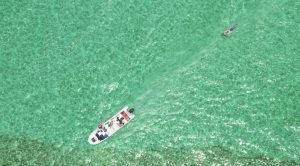
Eleven of twelve Bahamian seafood species are overfished. Now we have the numbers.
A new peer-reviewed paper in Frontiers in Marine Science delivers the first stock assessments for twelve commercially and culturally important Bahamian seafood species. Eleven of the twelve are overfished. Only dolphinfish comes out healthy.
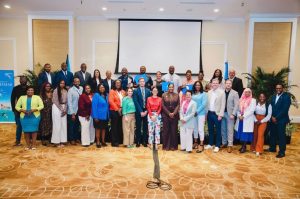
Bluequest Bahamas Wins National Award for Community Coral Restoration
Bluequest Bahamas, a Perry Institute Reef Rescue Network partner based at Delaporte Beach in Nassau, won the Community Conservation, Education, and Action (CCEA) award at the UN Tourism Bahamas Sustainable Islands Challenge. Here is how they built the coral restoration program that earned it.
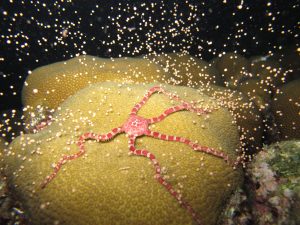
Why Coral Spawning Matters and How It Works
Coral Science & Conservation The Birth of the Next Generation of Bahamian Reefs: Why Coral Spawning Matters Every year, under the light of a late-summer full moon, something extraordinary happens
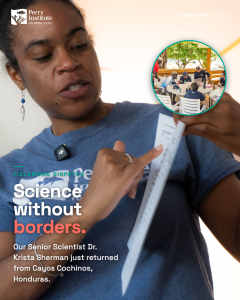
Listening for Nassau Grouper at Cayos Cochinos
Our Senior Scientist Dr. Krista Sherman just returned from her fourth year training Honduras Coral Reef Foundation staff on acoustic telemetry, listening for Nassau grouper at Roatan Bank.
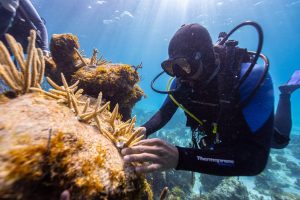
The Complete Guide to Planting Coral Reefs: Restoration Methods That Work
Plan your diving trip to Green Turtle Cay, Bahamas. Discover the best dive sites, coral reefs, how to get there, where to stay, and why this Abaco island is a hidden gem for underwater adventure.
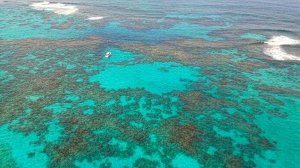
Green Turtle Cay Travel Guide for Divers
Plan your diving trip to Green Turtle Cay, Bahamas. Discover the best dive sites, coral reefs, how to get there, where to stay, and why this Abaco island is a hidden gem for underwater adventure.
