

Comic Illustrations by Fresh ‘n Salty
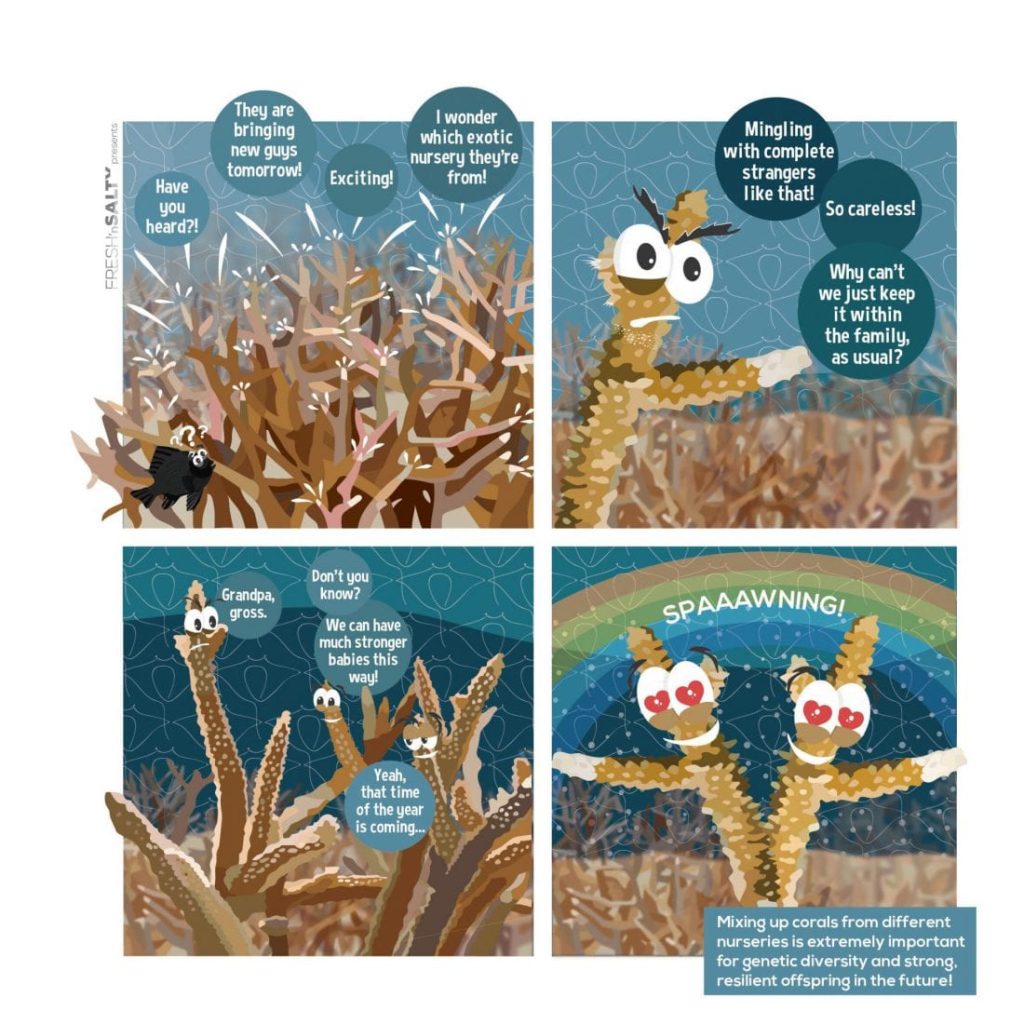
Let’s talk about… coral matchmaking!The nurseries we talked about last week from the Fresh ‘n Salty comic not only help us grow Critically Endangered corals, they also play an important role in spreading genetic complexity!To strengthen genetic diversity on coral reefs, we strategically populate coral nurseries with fragments from as many different colonies as possible. Each coral fragment is tracked from its colony of origin, through the nursery, all the way to the outplant coral reef. This thorough tracking is necessary to figure out the best places for outplanting and the most successful genetic combinations!
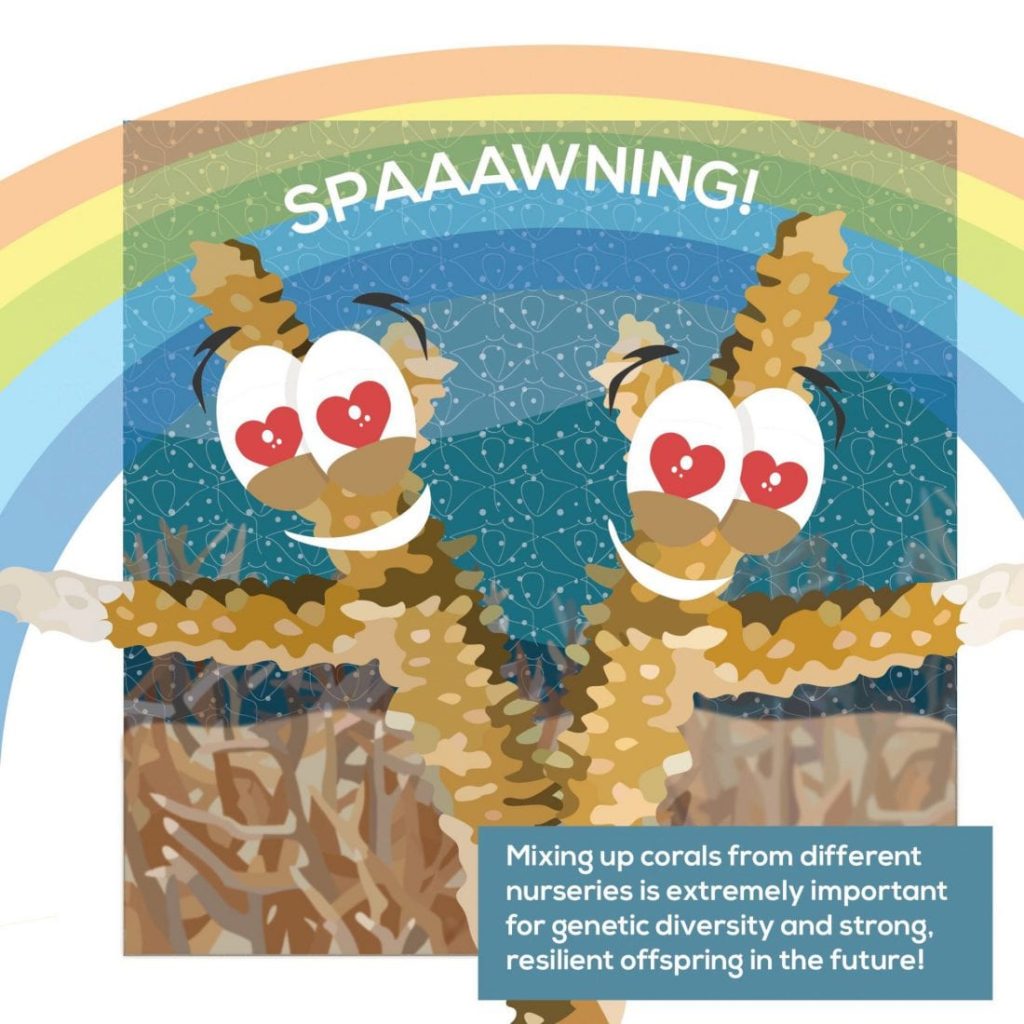
What’s the big deal with a bunch of genes anyway?Well, across all living kingdoms, diversity means progress – with endless twisting, matching and criss-crossing, the best genes are maintained and developed, while the weak ones are discarded. So the wider the base pool, the better!Led by Hayley-Jo Carr, our heroes at the Reef Rescue Network know all about it! By carefully nursing new generations of Staghorn and Elkhorn corals, they can selectively develop genotypes which are more adaptive and resilient to changing environmental conditions, such as ocean warming.We then outplant these genetically diverse coral fragments onto reefs, in hopes that when coral spawning takes place (typically around summer full moons), the eggs and sperm of many unique genotypes are mixed. When this happens, genetically superior coral larvae (i.e. baby corals) are produced and under the right conditions, seeded all over the restoration site!
The Reef Rescue Network is a unique group brought to life by the Perry Institute in order to coordinate the efforts of local organizations in establishing, managing and monitoring coral nurseries across the Bahamas. So apart from corals, they also nurse the vital partnerships between scientists, conservationists, business and coastal communities!
How can YOU help coral reefs?
- Limit your carbon footprint
- Conserve water
- Use reef-safe sunscreen
- Do not purchase items made from coral
- Eat sustainably caught seafood
- Reduce, reuse and recycle!
- Become certified as a PADI Reef Rescue Diver and help to maintain and outplant corals!
Listening for Nassau Grouper at Cayos Cochinos
Our Senior Scientist Dr. Krista Sherman just returned from her fourth year training Honduras Coral Reef Foundation staff on acoustic telemetry, listening for Nassau grouper at Roatan Bank.
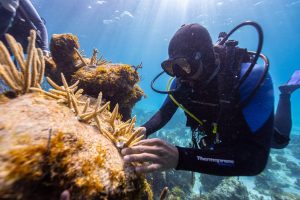
The Complete Guide to Planting Coral Reefs: Restoration Methods That Work
Plan your diving trip to Green Turtle Cay, Bahamas. Discover the best dive sites, coral reefs, how to get there, where to stay, and why this Abaco island is a hidden gem for underwater adventure.
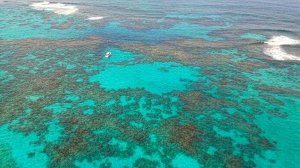
Green Turtle Cay Travel Guide for Divers
Plan your diving trip to Green Turtle Cay, Bahamas. Discover the best dive sites, coral reefs, how to get there, where to stay, and why this Abaco island is a hidden gem for underwater adventure.
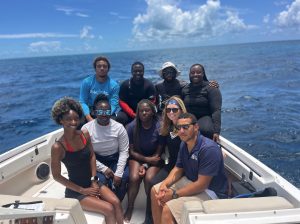
Become a PADI Dive Instructor in The Bahamas | Conservation-Focused IDC
Become a PADI Dive Instructor in The Bahamas | Conservation-Focused IDC | Perry Institute for Marine Science Education & Training Ready to take your diving skills to the next level
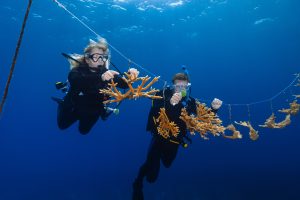
Stream2Sea Coral Care: The World’s First Reef-Positive Sunscreen
Stream2Sea Coral Care: The World’s First Reef-Positive Sunscreen | Perry Institute for Marine Science Conservation Partners Stream2Sea Coral Care: The World’s First Reef-Positive Sunscreen Discover why PIMS has partnered with

Build a Coral Reef for the Holidays | PIMS x Partanna
PIMS is partnering with Partanna to build a 100m² carbon-negative reef. Rick Fox is matching donations up to $25k. Help us build a sanctuary for the future.
