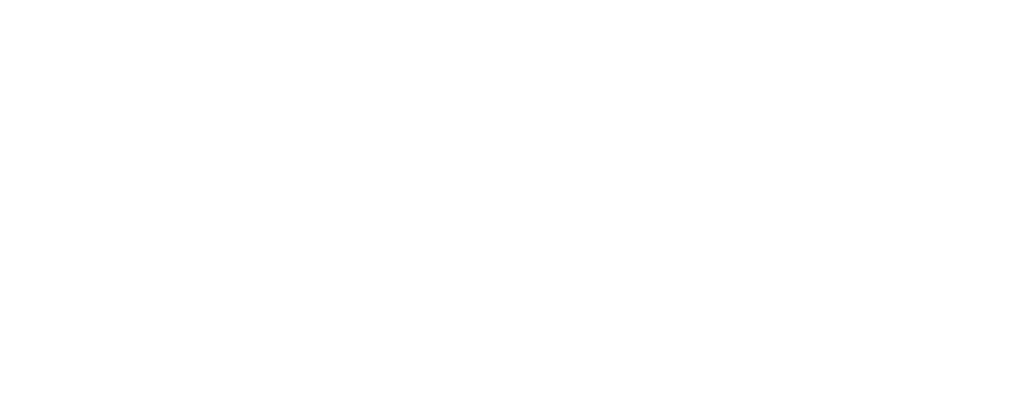



PIMS Research Associate Natalia Hurtado recently witnessed a rare and spectacular ocean phenomenon; in the middle of a night dive, she caught a tiger tail sea cucumber (Holothuria thomasi) in the throes of spawning, or sexual reproduction.
Natalia first noticed the sea cucumber clinging to a star coral colony and emitting stringy white mucus while she taught a PADI Advanced Open Water course at the Cape Eleuthera Institute, home to the Bahamas Coral Innovation Hub. Upon closer inspection, she realized it was releasing sperm into the water column.
Sea cucumbers are echinoderms, like starfish and sea urchins, and they’re named for their unusual oblong shape that looks like a fat cucumber. Tiger tails are especially recognizable in the Caribbean, with their brown colored bodies and white thorny looking protrusions
During sexual reproduction, sea cucumbers of the same species release large quantities of gametes into the water for fertilization to take place. When this happens, their reproductive success largely depends on the number of individuals in a region; the more sea cucumbers there are on a reef, the higher the likelihood that the sperm and eggs will find each other.
Sea cucumbers can also reproduce by asexual reproduction (fission), where they break into two cucumbers; a phenomenon that has stunned many unsuspecting amateur aquarists who keep them as “nature’s housekeepers.” Indeed, sea cucumbers are excellent tank cleaners, grazing on the microscopic bounty of marine waters. They typically eat algae, waste particles, and scraps of meaty foods from the sand that passes through their bodies.
More than 1,250 species of sea cucumbers exist in the wild, inhabiting both the shallows and deep ocean waters. Tiger tails are especially active at night, and are found at depths of up to 30 metres in reef caves and holes, and on top of sand, rubble and seagrass beds.
We highly encourage people to experience a night on the reef, when many sea creatures are foraging and reproducing that you can’t see during the day. “I was extremely excited because after 12 years of night diving, this is the first time I saw a tiger tail sea cucumber releasing sperm,” Natalia said.


Bluequest Bahamas Wins National Award for Community Coral Restoration
Bluequest Bahamas, a Perry Institute Reef Rescue Network partner based at Delaporte Beach in Nassau, won the Community Conservation, Education, and Action (CCEA) award at the UN Tourism Bahamas Sustainable Islands Challenge. Here is how they built the coral restoration program that earned it.
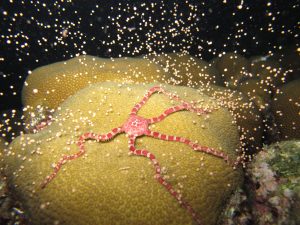
Why Coral Spawning Matters and How It Works
Coral Science & Conservation The Birth of the Next Generation of Bahamian Reefs: Why Coral Spawning Matters Every year, under the light of a late-summer full moon, something extraordinary happens

Listening for Nassau Grouper at Cayos Cochinos
Our Senior Scientist Dr. Krista Sherman just returned from her fourth year training Honduras Coral Reef Foundation staff on acoustic telemetry, listening for Nassau grouper at Roatan Bank.
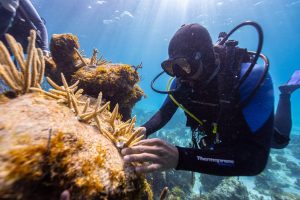
The Complete Guide to Planting Coral Reefs: Restoration Methods That Work
Plan your diving trip to Green Turtle Cay, Bahamas. Discover the best dive sites, coral reefs, how to get there, where to stay, and why this Abaco island is a hidden gem for underwater adventure.
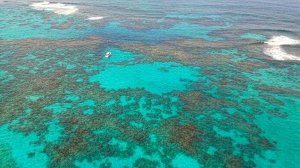
Green Turtle Cay Travel Guide for Divers
Plan your diving trip to Green Turtle Cay, Bahamas. Discover the best dive sites, coral reefs, how to get there, where to stay, and why this Abaco island is a hidden gem for underwater adventure.
Become a PADI Dive Instructor in The Bahamas | Conservation-Focused IDC
Become a PADI Dive Instructor in The Bahamas | Conservation-Focused IDC | Perry Institute for Marine Science Education & Training Ready to take your diving skills to the next level
