

A small coral nursery at Delaporte Beach in Nassau, The Bahamas is now a national model for community coral restoration. Bluequest Bahamas, a Perry Institute for Marine Science Reef Rescue Network partner, was awarded the Community Conservation, Education, and Action (CCEA) award at the UN Tourism Bahamas Sustainable Islands Challenge earlier this month, recognition that the coral restoration program it has been building in Nassau since 2025 is working.
May 2025
by early 2026
onto Nassau reefs
Nassau Reef Rescue Network
A Coral Nursery That Survived the Heat
Bluequest Bahamas launched its shallow-water coral nursery at Delaporte Beach in May 2025, seeding it with over 120 micro-fragmented staghorn and elkhorn corals. The timing was precarious. Nassau’s waters were heading into a summer that would push sea surface temperatures into ranges that bleach and kill coral across the Caribbean.
Bleaching events hit nurseries across the region that year. Bluequest’s corals held on. By early 2026, the nursery had grown to include roughly 300 additional coral fragments, and the first round of outplanting had already returned corals to Nassau’s reefs, building back the reef structure that the city’s dive sites depend on.
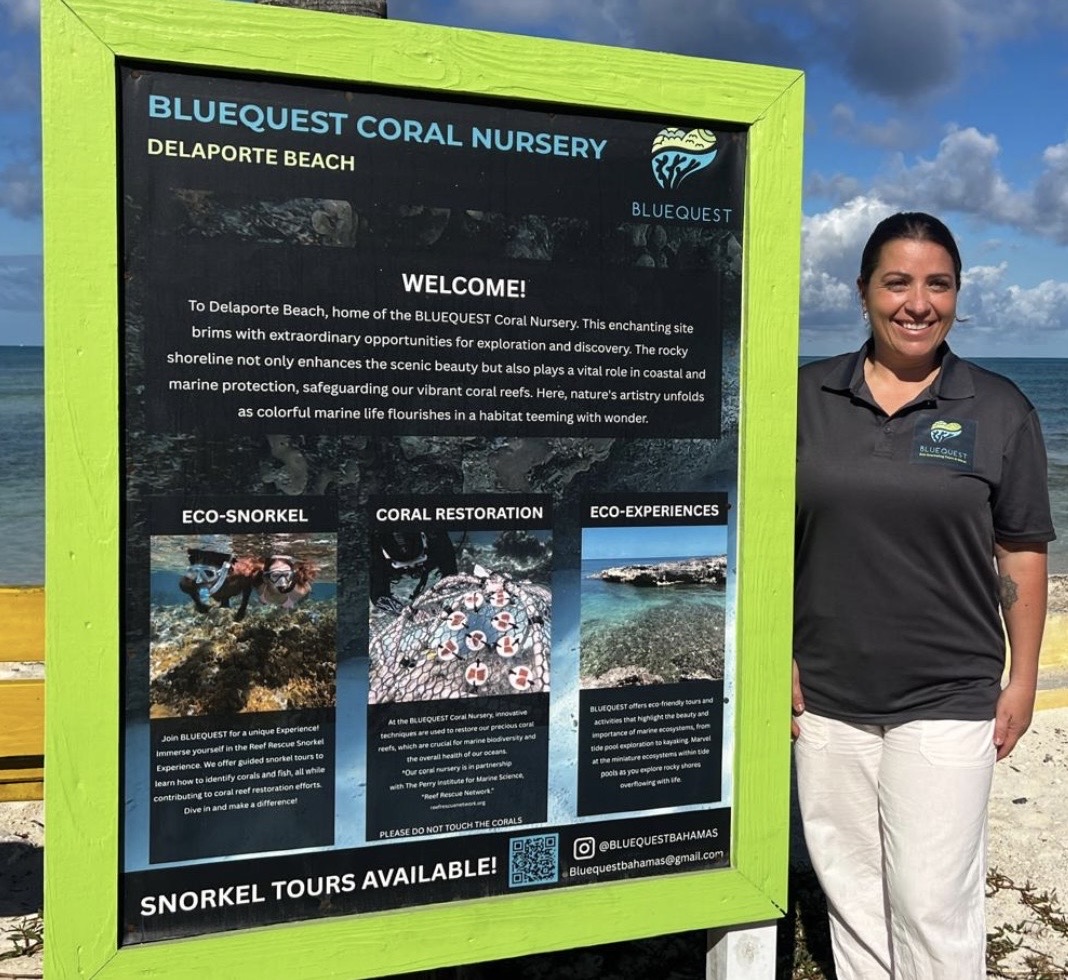
Allison Longley at the Bluequest Coral Nursery, Delaporte Beach, Nassau.
The Award
What the CCEA Award Recognizes
The UN Tourism Bahamas Sustainable Islands Challenge was launched in August 2025 to identify and support Bahamian entrepreneurs addressing real problems in ocean conservation, community tourism, and climate resilience. Six finalists were selected, mentored, and presented before a panel of judges. Bluequest won the Community Conservation, Education, and Action (CCEA) category.
The award recognises initiatives that go beyond environmental protection alone and connect conservation outcomes with community participation and education. The CCEA category specifically looks for programs where local communities are not just the beneficiaries but the leaders. Bluequest qualified on every count. The program offers eco-snorkel tours that teach participants coral identification and reef ecology, coral restoration experiences where participants contribute to active nursery care, and structured eco-experiences for residents and visitors alike.
As part of the prize, Bluequest now has access to a global innovation network, international mentorship, and investor visibility through the UN Tourism partnership, resources that will directly support the continued growth of their coral restoration program in Nassau.
In Their Own Words
Allison Longley on What the Award Means
Allison Longley founded Bluequest Bahamas to give people a genuine connection to the reefs they were visiting, not just a snorkel tour, but a reason to care and a way to help. The Bluequest model pairs guided eco-snorkel experiences with hands-on coral restoration, meaning participants leave the water having contributed to the nursery they just swam through.
“This award is more than recognition for Bluequest. It is recognition that small island communities can lead global solutions for ocean conservation. Our goal has always been to inspire people to move beyond simply observing coral reefs and become active participants in protecting and restoring them. Through our partnership with Perry Institute for Marine Science, we are helping connect education, tourism, and direct reef restoration efforts here in The Bahamas. We are deeply honored to have our vision recognised through the United Nations Bahamas Sustainable Islands Challenge.”
Allison Longley, Founder, Bluequest Bahamas
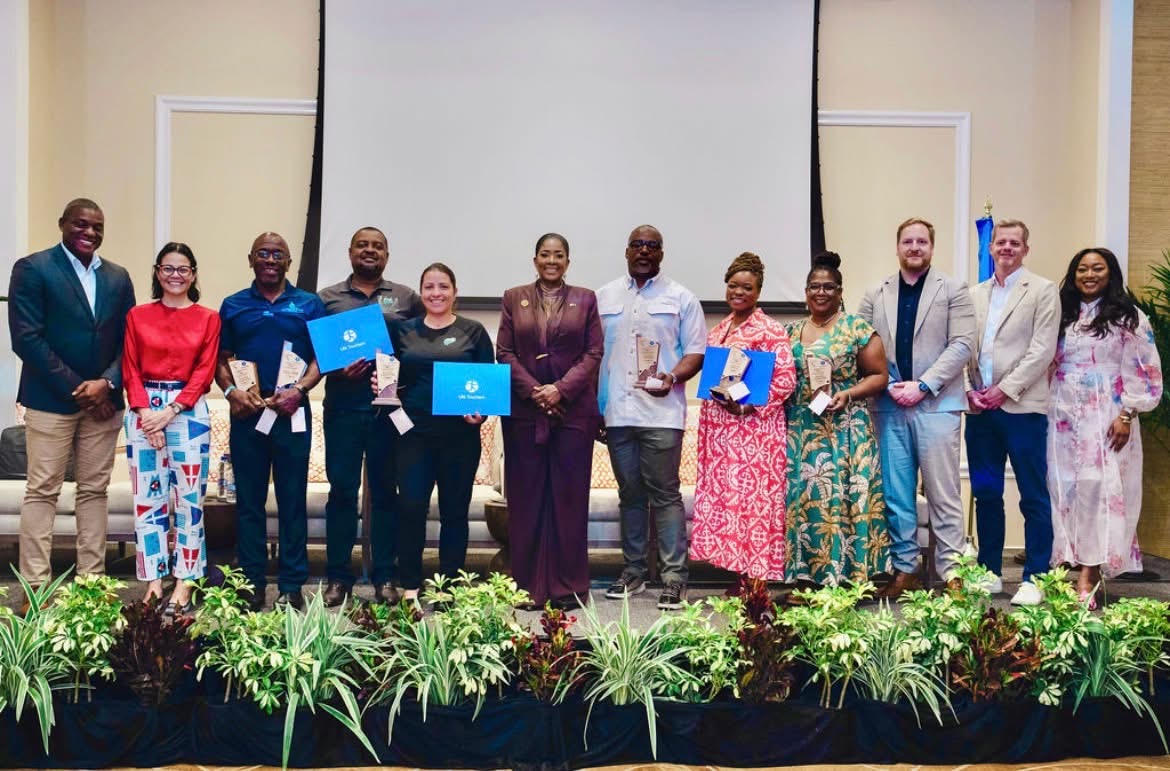
Award recipients at the UN Tourism Bahamas Sustainable Islands Challenge ceremony, Nassau, May 2026.
The Science
Why Nursery Survival Through Summer Matters
Not all coral nurseries survive their first summer in Nassau. Staghorn and elkhorn corals are among the fastest-growing and most important reef-building species in the Caribbean, which is why they are prioritised in most coral restoration programs in the Bahamas, but they are also sensitive to thermal stress. When water temperatures exceed normal summer ranges, the algae living inside coral tissue is expelled, turning the coral white and leaving it vulnerable to disease and death.
“Survival through the summer months is a meaningful indicator of nursery performance,” said Alex Frans, PIMS Coral Programs Manager. Nursery fragments that hold on through elevated summer temperatures tend to represent more thermally tolerant genetic lines, which is important for the long-term health of the reefs they will eventually be planted on. The fragments that Bluequest outplanted back onto Nassau reefs in early 2026 are among the hardier specimens the nursery produced in its first growing season.
Reef Rescue Network
A Community Coral Restoration Model for The Bahamas
Bluequest is part of the Perry Institute for Marine Science Reef Rescue Network, a network that now spans 7 countries, 14 islands, and 41 coral nurseries across the Caribbean and western Atlantic. Every RRN partner follows shared protocols for coral fragmentation, nursery management, and outplanting developed and monitored by PIMS scientists. That means the data from the Delaporte Beach nursery contributes to a regional picture of reef recovery, not just a local one.
The Bluequest model is particularly significant because it demonstrates that a coral restoration program in The Bahamas does not require a dedicated research institution to succeed. It requires local knowledge, community relationships, and a commitment to doing the work carefully, over time. Allison Longley has all three. The CCEA award is, in effect, recognition that the community-led model the Reef Rescue Network is built around can produce real results at real scale.
Reef Rescue Network at a Glance
41 nurseries · 7 countries · 14 islands · Community-led coral restoration from Nassau to Colombia to Madagascar
Get Involved
Experience Coral Restoration in Nassau with PIMS
The Delaporte Beach nursery that Allison Longley built is the same nursery you can work in through Perry Institute’s Reef Rescue Field Trips in Nassau. These are half-day and full-day programs for residents, families, and visitors who want to move beyond simply observing the reef and actually plant coral on it. No dive certification is required. Groups work alongside trained staff to care for nursery fragments and, on full-day programs, complete an outplanting on a nearby reef site.
Reef Rescue Field Trips run June through August 2026 at three levels, from a half-day snorkel and nursery introduction to a full guided restoration experience. Groups of up to five guests can charter the full program, making it suitable for families, corporate groups, and visiting researchers. Pricing starts at $650 per person, with full group charters available at $3,250.
If you are looking for a deeper experience, Perry Institute also runs multi-day coral restoration expeditions across The Bahamas, including programs at Small Hope Bay on Andros, Green Turtle Cay in Abaco, and Forfar Field Station on North Andros. Participants on these programs work directly with PIMS scientists on active research alongside reef restoration activities.
