

Traditionally, fishers have largely ignored parrotfish in The Bahamas, preferring to catch the more profitable and popular groupers and snappers.
This is good because parrotfish play pivotal roles on healthy coral reefs. Often dubbed “nature’s lawnmowers,” they graze on algae, and prevent it from overgrowing and smothering essential reef-building corals.
But recent anecdotal accounts suggest fishers have been catching more and more parrotfish in the turquoise waters of the nearly 700-island archipelago.
And parrotfish harvesting is completely unregulated in The Bahamas, even though the International Coral Reef Initiative recommended Caribbean nations adopt management strategies to restore parrotfish as early as 2013.
To learn more – specifically how fishers are harvesting parrotfish, and what motivates them to do it – Dr. Karlisa Callwood, Director of our Community Engagement Conservation Education & Action program, galvanized a team of volunteers who surveyed 164 fishers on 12 different Bahamian islands in her latest study.
The Results
More than 50% of fishers reported they catch parrotfish, usually as bycatch on fishing trips. In other words, fishers often accidentally catch parrotfish in hooks, nets and traps, even though they intend to catch something else.
Many fishers also reported they sell parrotfish in local markets, and that requests for these species are increasing. This is likely due to increased immigration from countries like Jamaica and Haiti, where parrotfish dishes are popular meals.
The growing demand for parrotfish in The Bahamas is concerning because, where parrotfish have been overfished in other parts of the Caribbean, reefs have suffered tragic declines in coral cover. Not to mention, in 2014 the Global Coral Reef Monitoring Network reported large parrotfish populations are a hallmark of the world’s healthiest coral reefs.
According to Dr. Callwood’s study, only fishers from New Providence, Abaco, Andros, Mayaguana, and Eleuthera, however, appear to target parrotfish intentionally.
“Some fishers collect the fish because they will take anything they catch; some because they are using it to help feed their families; others because it is specifically being requested; and some just because they like to eat it,” Dr.Callwood wrote.

Moving forward
Dr. Callwood’s paper shows an emerging parrotfish fishery undoubtedly exists in The Bahamas.
And as the public continues to develop a taste for these brightly coloured algae eaters, she hopes to involve local fishers in any future management and conservation efforts, as well as spotlight the importance of maintaining healthy parrotfish populations on local reefs.
“Education and awareness are necessary to inform fishers, as well as consumers and the general public, of the importance of reef health and the associated benefits of parrotfish,” she wrote. “Content focusing on these aspects are critical to any management strategy that is implemented.”
Dr. Callwood wishes to thank all the fishers who generously donated their time, and to volunteers from Young Marine Explorers, Cape Eleuthera Institute, Bahamas National Trust, San Salvador Living Jewels, Andros Conservancy & Trust, OceanCrest Alliance, Dolphin Communication Project, and ISER Caribe, who helped to conduct interviews. This work was supported by Disney Conservation Fund.
You can read the full study here, published online in Global Ecology and Conservation.

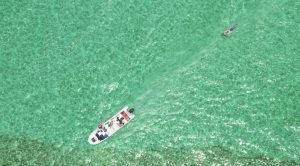
Eleven of twelve Bahamian seafood species are overfished. Now we have the numbers.
A new peer-reviewed paper in Frontiers in Marine Science delivers the first stock assessments for twelve commercially and culturally important Bahamian seafood species. Eleven of the twelve are overfished. Only dolphinfish comes out healthy.

Bluequest Bahamas Wins National Award for Community Coral Restoration
Bluequest Bahamas, a Perry Institute Reef Rescue Network partner based at Delaporte Beach in Nassau, won the Community Conservation, Education, and Action (CCEA) award at the UN Tourism Bahamas Sustainable Islands Challenge. Here is how they built the coral restoration program that earned it.
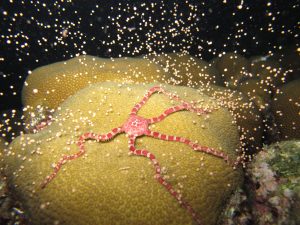
Why Coral Spawning Matters and How It Works
Coral Science & Conservation The Birth of the Next Generation of Bahamian Reefs: Why Coral Spawning Matters Every year, under the light of a late-summer full moon, something extraordinary happens
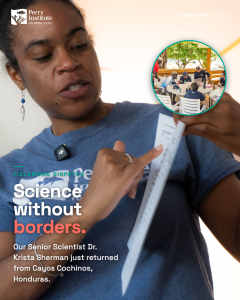
Listening for Nassau Grouper at Cayos Cochinos
Our Senior Scientist Dr. Krista Sherman just returned from her fourth year training Honduras Coral Reef Foundation staff on acoustic telemetry, listening for Nassau grouper at Roatan Bank.
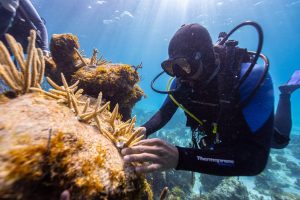
The Complete Guide to Planting Coral Reefs: Restoration Methods That Work
Plan your diving trip to Green Turtle Cay, Bahamas. Discover the best dive sites, coral reefs, how to get there, where to stay, and why this Abaco island is a hidden gem for underwater adventure.
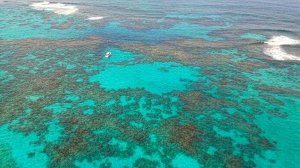
Green Turtle Cay Travel Guide for Divers
Plan your diving trip to Green Turtle Cay, Bahamas. Discover the best dive sites, coral reefs, how to get there, where to stay, and why this Abaco island is a hidden gem for underwater adventure.
