

Halloween came early for our coral reef research team who visited South Andros last month. During a lucky dive, our researchers noticed bright, pumpkin-orange webs oozing from tabular reef sponges. Upon closer inspection, they realized this reef’s “Halloween decorations” were actually a mixture of sponge mucus and tiny orange balls.
Curious to learn more, Senior Scientist Dr. Valeria Pizarro was suspicious the tiny balls might be eggs… or even larvae. “It was amazing, I was so excited and I thought these sponges might be spawning, but I didn’t know for sure,” she said.

Love is in the water during the warmer months (July to October), as that’s when Caribbean corals, algae, sea stars and more begin to spawn or sexually reproduce. To verify whether this particular sponge was spawning, she sent her field photos to renowned expert Dr. Sven Zea of the Universidad Nacional de Colombia (Colombia National University).
Dr. Zea confirmed the tiny spheres within the orange mucus filaments were indeed embryos or larvae from the brown encrusting octopus sponge, Ectyoplasia ferox. This sponge is a hermaphrodite, meaning each individual can produce both eggs and sperm. Fertilization happens within the sponge when it encounters sperm travelling through the water column from another individual of the same species.

Although Dr. Zea has seen these sponges releasing embryos in The Bahamas before, little is known about their reproductive process. But what we do know is that many of the embryos and larvae we observed will eventually settle onto the reef as brand new sponges.
If you’re an avid diver, keep an eye out for brown encrusting octopus sponges on coral rubble and dead areas of the reef, between 12 to 22 metres. That’s where they’re commonly found. You never know what new discoveries await you in the underwater world!
To learn more about the diversity of sponges within The Bahamas and the Caribbean, check out this incredible sponge guide created by Dr. Zea and his colleagues here.

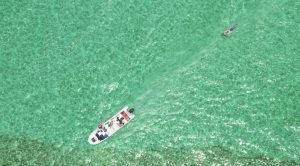
Eleven of twelve Bahamian seafood species are overfished. Now we have the numbers.
A new peer-reviewed paper in Frontiers in Marine Science delivers the first stock assessments for twelve commercially and culturally important Bahamian seafood species. Eleven of the twelve are overfished. Only dolphinfish comes out healthy.
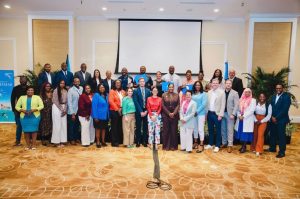
Bluequest Bahamas Wins National Award for Community Coral Restoration
Bluequest Bahamas, a Perry Institute Reef Rescue Network partner based at Delaporte Beach in Nassau, won the Community Conservation, Education, and Action (CCEA) award at the UN Tourism Bahamas Sustainable Islands Challenge. Here is how they built the coral restoration program that earned it.
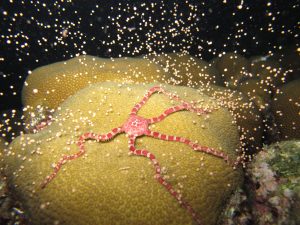
Why Coral Spawning Matters and How It Works
Coral Science & Conservation The Birth of the Next Generation of Bahamian Reefs: Why Coral Spawning Matters Every year, under the light of a late-summer full moon, something extraordinary happens
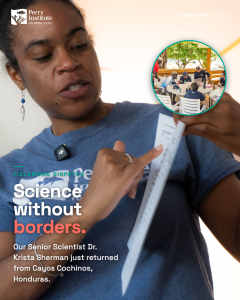
Listening for Nassau Grouper at Cayos Cochinos
Our Senior Scientist Dr. Krista Sherman just returned from her fourth year training Honduras Coral Reef Foundation staff on acoustic telemetry, listening for Nassau grouper at Roatan Bank.
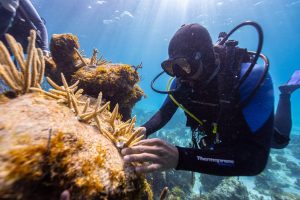
The Complete Guide to Planting Coral Reefs: Restoration Methods That Work
Plan your diving trip to Green Turtle Cay, Bahamas. Discover the best dive sites, coral reefs, how to get there, where to stay, and why this Abaco island is a hidden gem for underwater adventure.
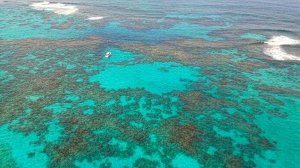
Green Turtle Cay Travel Guide for Divers
Plan your diving trip to Green Turtle Cay, Bahamas. Discover the best dive sites, coral reefs, how to get there, where to stay, and why this Abaco island is a hidden gem for underwater adventure.
